-

Dinner at the Night Library
59,000 TNDShe is on the verge of quitting when she receives a message from somebody calling themselves ‘Seven Rainbows’, inviting her to apply for a job at a library with no name, a place referred to simply as ‘The Night Library’. After successfully passing the interview, Otaha arrives at The Night Library and her sunny personality immediately earns her comparisons with Anne of Green Gables. For the very first time she feels she has found her place in the world.
As well as a treasure trove of books, the library houses a group of likeminded literary misfits, including a legendary chef who prepares incredible meals for the library’s employees at the end of each day. Together they embark on a series of bookish adventures. But when the library’s mysterious owner decides to temporarily close the library, Otaha and her friends fear that it may not reopen and that the peace they have found there will be lost to them forever. Is their friendship and their faith in the value of books strong enough to save it? And what will remain if it isn’t? Dinner at the Night Library is a heartwarming literary mystery, filled with quirky characters, Japanese culture and the mouthwatering meals.
It asks why books matter and offers a cheer of encouragement to everybody who believes they do. Ultimately, it is a paean to reading and the relevance of books through the ages—past, present, and future. -

Free Food for Millionaires
59,000 TNDCasey Han’s four years at Princeton gave her many things, “But no job and a number of bad habits.” Casey’s parents, who live in Queens, are Korean immigrants working in a dry cleaner, desperately trying to hold on to their culture and their identity. Their daughter, on the other hand, has entered into rarified American society via scholarships. But after graduation, Casey sees the reality of having expensive habits without the means to sustain them. As she navigates Manhattan, we see her life and the lives around her, culminating in a portrait of New York City and its world of haves and have-nots. FREE FOOD FOR MILLIONAIRES offers up a fresh exploration of the complex layers we inhabit both in society and within ourselves. Inspired by 19th century novels such as Vanity Fair and Middlemarch, Min Jin Lee examines maintaining one’s identity within changing communities in what is her remarkably assured debut.
-

Greek Lessons
59,000 TNDIn a classroom in Seoul, a young woman watches her Greek language teacher at the blackboard. She tries to speak but has lost her voice. Her teacher finds himself drawn to the silent woman, for day by day he is losing his sight.
Soon they discover a deeper pain binds them. For her, in the space of just a few months, she has lost both her mother and the custody battle for her nine-year-old son. For him, it’s the pain of growing up between Korea and Germany, being torn between two cultures and languages.
-

Heaven
49,000 TNDIn Heaven, a fourteen-year-old boy is tormented for having a lazy eye. Instead of resisting, he chooses to suffer in silence. The only person who understands what he is going through is a female classmate, Kojima, who experiences similar treatment at the hands of her bullies.
Providing each other with immeasurable consolation at a time in their lives when they need it most, the two young friends grow closer than ever. But what, ultimately, is the nature of a friendship when your shared bond is terror?
-
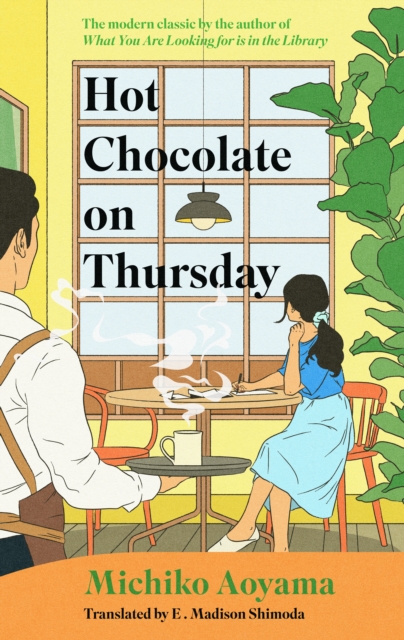
Hot Chocolate on Thursday
79,000 TNDWithout even realizing it, we may touch and change someone else’s life.
Taking a walk along the river, cooking the best tamagoyaki, ordering hot chocolate, forgetting to remove our nail polish… The small, everyday acts that we do can lead to unexpected encounters, reverberate far beyond our own circle, and ultimately make a difference in the world around us.
Hot Chocolate on Thursday is a tapestry of slice-of-life moments that each open and close with a woman ordering her regular hot chocolate at the mysterious Marble Cafe. What happens in between will touch and swell your heart, as we connect with a community of untold unfolding lives.
-

Hotel Iris
49,000 TNDIn a crumbling, seaside hotel on the coast of Japan, quiet, seventeen-year-old Mari works the front desk as her mother fusses over the off-season customers. When, one night, they are forced to eject a prostitute and a middle-aged man from his room, Mari finds herself drawn to the man’s voice, in what will become the first gesture of a long seduction. Mari begins to visit the mysterious man at his island home, and he initiates her into a dark realm of both pain and pleasure.
As Mari’s mother and the police begin to close in on the illicit affair, events move to a dramatic climax. By the author of The Housekeeper and the Professor
-
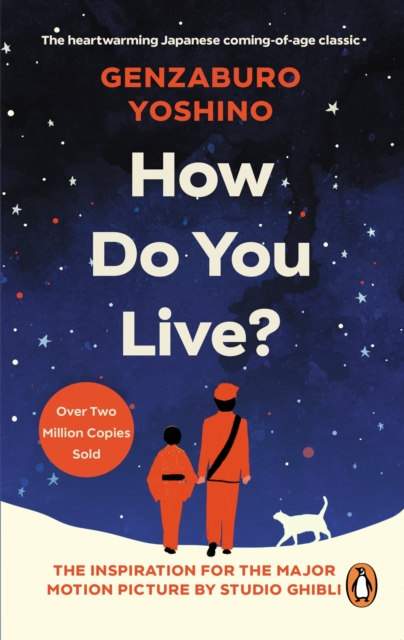
How Do You Live?
59,000 TNDThe inspiration for The Boy & The Heron, the major new Hayao Miyazaki/Studio Ghibli film and Golden Globe Award winner 2024A NEW YORK TIMES BESTSELLER’In How Do You Live?, Copper, our hero, and his uncle are our guides in science, in ethics, in thinking. And on the way they take us, through a school story set in Japan in 1937, to the heart of the questions we need to ask ourselves about the way we live our lives. We will experience betrayal and learn about how to make tofu.
We will examine fear, and how we cannot always live up to who we think we are, and we learn about shame, and how to deal with it. We will learn about gravity and about cities, and most of all, we will learn to think about things – to, as the writer Theodore Sturgeon put it, ask the next question’ – from the foreword by Neil Gaiman
-

Human Acts
59,000 TNDThe story of this tragic episode unfolds in a sequence of interconnected chapters as the victims and the bereaved encounter suppression, denial, and the echoing agony of the massacre. From Dong-ho’s best friend who meets his own fateful end; to an editor struggling against censorship; to a prisoner and a factory worker, each suffering from traumatic memories; and to Dong-ho’s own grief-stricken mother; and through their collective heartbreak and acts of hope is the tale of a brutalized people in search of a voice.
-
Hunchback
69,000 TNDBorn with a congenital muscle disorder, Shaka spends her days in her room in a care home outside Tokyo, relying on an electric wheelchair to get around and a ventilator to breathe. But if Shaka’s physical life is limited, her quick, mischievous mind has no boundaries: She takes e-learning courses on her iPad, publishes explicit fantasies on websites, and anonymously troll-tweets to see if anyone is paying attention (“In another life, I’d like to work as a high-class prostitute”). One day, she tweets into the void an offer of an enormous sum of money for a sperm donor. To Shaka’s surprise, her new nurse accepts the dare, unleashing a series of events that will forever change Shaka’s sense of herself as a woman in the world.
-
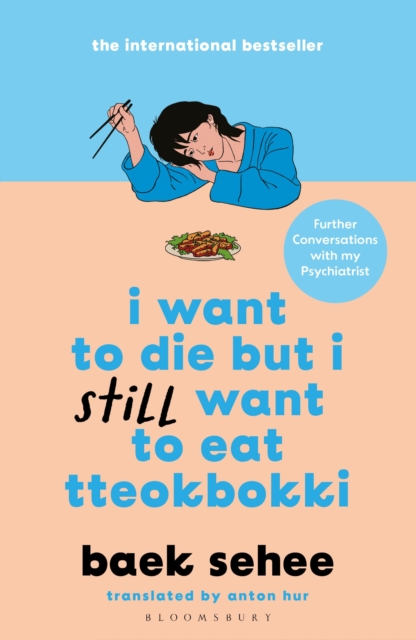
I Want to Die but I Still Want to Eat Tteokbokki
59,000 TNDPSYCHIATRIST: So how can I help you? ME: I don’t know, I’m – what’s the word – depressed? Do I have to go into detail? Baek Sehee is a successful young social media director at a publishing house when she begins seeing a psychiatrist about her – what to call it? – depression? She feels persistently low, anxious, endlessly self-doubting, but also highly judgemental of others. She hides her feelings well at work and with friends; adept at performing the calmness, even ease, her lifestyle demands. The effort is exhausting, overwhelming, and keeps her from forming deep relationships.
This can’t be normal. But if she’s so hopeless, why can she always summon a desire for her favourite street food, the hot, spicy rice cake, tteokbokki? Is this just what life is like? Recording her dialogues with her psychiatrist over a 12-week period, Baek begins to disentangle the feedback loops, knee-jerk reactions and harmful behaviours that keep her locked in a cycle of self-abuse. Part memoir, part self-help book, I Want to Die but I Want to Eat Tteokbokki is a book to keep close and to reach for in times of darkness.
-
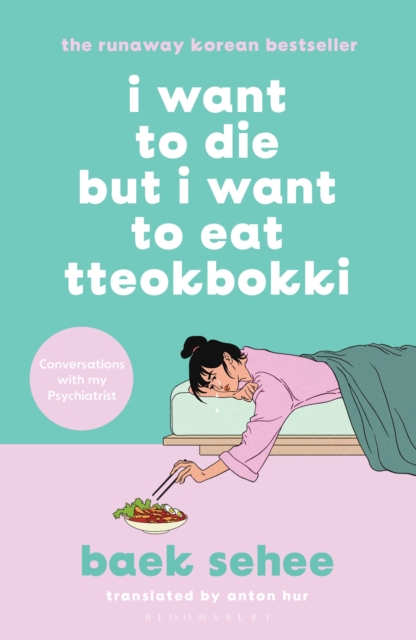
I Want to Die but I Want to Eat Tteokbokki
59,000 TNDBaek Se-Hee is a successful young social media director at a publishing house when she begins seeing a psychiatrist about her–what to call it?–depression? She feels persistently low, anxious, endlessly self-doubting, but also highly judgemental of others. She hides her feelings well at work and with friends, adept at performing the calmness, even ease, her lifestyle demands. The effort is exhausting and overwhelming and keeps her from forming deep relationships. This can’t be normal. But if she’s so hopeless, why can she always summon a yen for her favourite street food, the hot, spicy rice cake, tteokbokki? Is this just what life is like? Recording her dialogues with her psychiatrist over a 12-week period, Baek begins to disentangle the feedback loops, knee-jerk reactions, and harmful behaviours that keep her locked in a cycle of self-abuse.
-
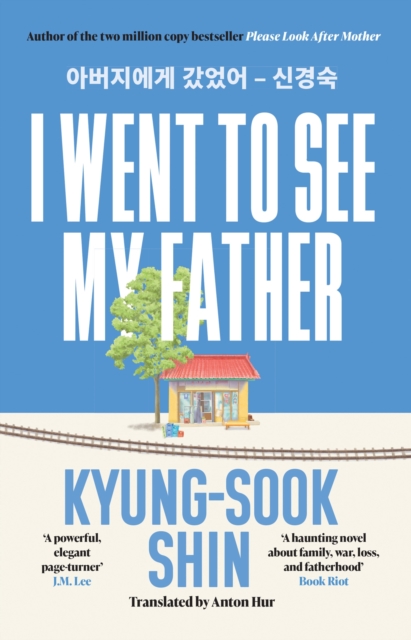
I Went to See My Father
59,000 TNDAfter losing her daughter in a tragic accident, Hon returns to her childhood home in the Korean countryside to look after her elderly father. There, the discovery of a chest of letters compels her to piece together the violent, vibrant story of his life.
More than just a portrait of one man, I Went to See My Father asks us to look at the ones we love, uncover the secrets they keep, and finally see who they really are. Affectionate, epic, joyous and lasting, this is the perfect follow-up to beloved classic Please Look After Mother. Translated by Anton Hur
