-

Temple Alley Summer
65,000 TNDNo one else thinks it’s weird, and, even though Kazu doesn’t remember ever seeing her before, they all seem convinced that the ghost-girl Akari has been their friend for years!When Kazu’s summer project to learn about Kimyo Temple draws the meddling attention of his mysterious neighbor Ms. Minakami and his secretive new classmate Akari, Kazu soon learns that not everything is as it seems in his hometown. Kazu discovers that Kimyo Temple is linked to a long forgotten legend about bringing the dead to life, which could explain Akari’s sudden appearance—is she a zombie or a ghost? Kazu and Akari join forces to find and protect the source of the temple’s power.
An unfinished story in a magazine from Akari’s youth might just hold the key to keeping Akari in the world of the living, and it’s up to them to find the story’s ending and solve the mystery as the adults around them conspire to stop them from finding the truth. -

The Beast Player
49,000 TNDElin’s family have an important responsibility: caring for the fearsome water serpents that form the core of their kingdom’s army. So when some of the beasts mysteriously die, Elin’s mother is sentenced to death as punishment. With her last breath she manages to send her daughter to safety.
Alone, far from home, Elin soon discovers that she can talk to both the terrifying water serpents and the majestic flying beasts that guard her queen. This skill gives her great powers, but it also involves her in deadly plots that could cost her life. Can she save herself and prevent her beloved beasts from being used as tools of war? Or must she face the terrible battles to come? -

The Beast Warrior
49,000 TNDTen years have passed since the events of The Beast Player. Elin and Ialu are married, with a young son, living a quiet, peaceful life when one day Elin is called upon to investigate a matter of great urgency: the fearsome Toda are dying and nobody knows why. As Elin investigates, she uncovers a deadly plot and a brewing invasion.
Can she protect her homeland without allowing her beloved beasts to be used as weapons of war, or will she have to compromise her principles to save her family? -

The Dog Who Dared to Dream
49,000 TNDThis is the story of a dog named Scraggly. Born an outsider because of her distinctive appearance, she spends most of her days in the sun-filled yard of her owner’s house. Scraggly has dreams and aspirations just like the rest of us.
But each winter, dark clouds descend and Scraggly is faced with challenges that she must overcome. Through the clouds and even beyond the gates of her owner’s yard lies the possibility of friendship, motherhood and happiness – they are for the taking if Scraggly can just hold on to them, bring them home and build the life she so desperately desires. The Dog Who Dared to Dream is a wise tale of the relationship between dog and man, as well as a celebration of a life lived with courage. -

The Hen Who Dreamed she Could Fly
49,000 TNDThis is the story of a hen named Sprout. No longer content to lay eggs on command only to have them carted off to the market, she glimpses her future every morning through the barn doors, where the other animals roam free, and comes up with a plan to escape into the wild—and to hatch an egg of her own.
An anthem for individuality and motherhood, The Hen Who Dreamed She Could Fly has captivated millions of readers in Korea. Now the novel is making its way around the world, where it has the potential to inspire generations of readers the way Jonathan Livingston Seagull or The Alchemist have. And with Nomoco’s evocative illustrations throughout, this first English-language edition beautifully captures the journey of an unforgettable character in world literature. -

The House of the Lost on the Cape
84,000 TNDThe newly formed family finds refuge in a mayoiga, a lost house, perched atop a beautiful cape overlooking the sea. While helping to rebuild Kitsunezaki, the three adapt to their new lives and supernatural new home, slowly healing from their troubled pasts. Kiwa regales Yui and Hiyori with local legends—from the shapeshifting fox-woman who used to roam the mountains, to the demon Agamé and a sea snake who once terrorized the townspeople, preying upon their grief and fears until they trapped the snake and the demon’s claws in an underwater cave.
But when mysterious and sinister events start happening around town, the three fear the worst. Did the earthquake release Agamé and the sea snake into the world again? Kiwa, Yui, and Hiyori join forces with a merry band of kappa river spirits, a bold zashiki warashi house spirit, and flying Jizo guardian statues to save their new family and home and banish Agamé and the snake once and for all. Now a hit anime film, The House of the Lost on the Cape is a heartwarming tale about the strength of family and friendship in the face of natural and mythical forces. -

The Secret of the Blue Glass
49,000 TNDIn a dustylibrary, in the quietest corner of a house in a Tokyo suburb, live the LittlePeople: Fern and Balbo, Robin and Iris. Just a few inches high, sleeping incigarette boxes and crafting shoes from old book jackets, they need only onething from their Humans – a nightly glass of milk, served in a sparkling BlueGlass goblet, by a trusted young member of the Humanfamily.
But when the Second World War comes to Japan,bringing a dangerous new kind of patriotism, both Humans and their belovedLittle People face a world they could never before have imagined. It will takegreat love, bravery, and a rather loyal pigeon, to bring their unique familiesback together once more…
-
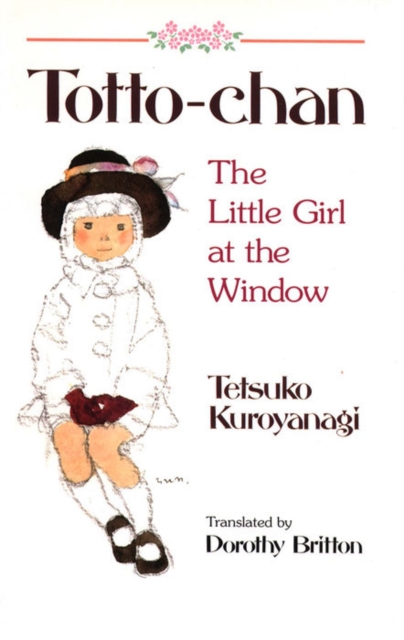
Totto Chan: The Little Girl at the Window
49,000 TNDThis engaging series of childhood recollections tells about an ideal school in Tokyo during World War II that combined learning with fun, freedom, and love. This unusual school had old railroad cars for classrooms, and it was run by an extraordinary man-its founder and headmaster, Sosaku Kobayashi-who was a firm believer in freedom of expression and activity. In real life, the Totto-chan of the book has become one of Japan’s most popular television personalities-Tetsuko Kuroyanagi.
She attributes her success in life to this wonderful school and
