-
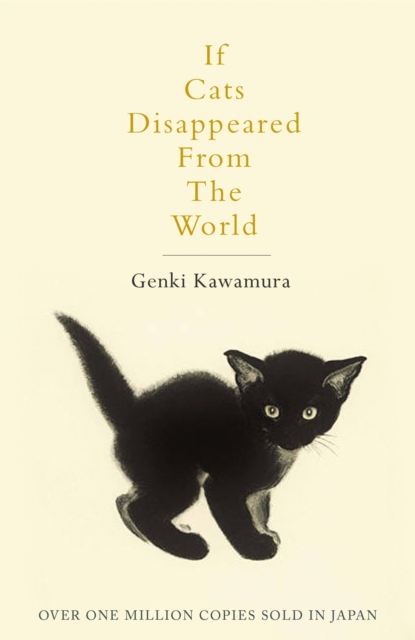
If Cats Disappeared From The World
59,000 TNDThe million-copy bestseller, perfect for fans of Before the Coffee Gets Cold. What would you do if you were told you only had days left to live? And what would you give up for just one more day? Genki Kawamura’s If Cats Disappeared From The World is a tender, whimsical tale of love, loss, and the quiet miracles of everyday life. A thirty-year-old postman lives a simple life, with only his cat, Cabbage, for company.
But when an unexpected diagnosis turns his world upside down, he is faced with an impossible choice. The Devil appears to him, dressed in a Hawaiian shirt, and makes an offer: if he makes one thing in the world disappear, he can have an extra day of life. As the days tick by, and with Cabbage by his side, he begins a journey that might just lead him back to the people he thought he’d lost.
Before it’s too late . . .
If Cats Disappeared from the World is a life-affirming meditation on what we leave behind – and what we hold onto until the very end. ‘If you’re a fan of The Guest Cat (or even just cats generally), you’ll love this’ – The Sunday Times
-

Kim Jiyoung, Born 1982
59,000 TNDKim Jiyoung, Born 1982 is the life story of one young woman born at the end of the twentieth century and raises questions about endemic misogyny and institutional oppression that are relevant to us all. Riveting, original and uncompromising, this is the most important book to have emerged from South Korea since Han Kang’s The Vegetarian. Praise for Kim Jiyoung, Born 1982 ‘It describes experiences that will be recognisable everywhere. It’s slim, unadorned narrative distils a lifetime’s iniquities into a sharp punch.’ The Sunday Times ‘A ground-breaking work of feminist fiction’ Stylist ‘Along with other socially critical narratives to come out of Korea, such as Bong Joon-ho’s Oscar-winning film Parasite, her story could change the bigger one.’ TheGuardian ‘This witty, disturbing book deals with sexism, mental health issues and the hypocrisy of a country where young women are “popping caffeine pills and turning jaundiced” as they slave away in factories helping to fund higher education for male siblings.’ The Independent ‘Enthralling and enraging.’ Sunday Express ‘Cho’s moving, witty and powerful novel forces us to face our reality, in which one woman is seen, pretty much, as interchangeable with any other.
-

Kitchen
49,000 TNDKitchen comprises Banana Yoshimoto’s two classic tales about mothers, trans identity, bereavement, kitchens, love and tragedy. First published in 1987, it won two of Japan’s most prestigious literary prizes, remained at the top of the bestseller lists for over a year and has gone on to be a much-loved international bestseller.
-
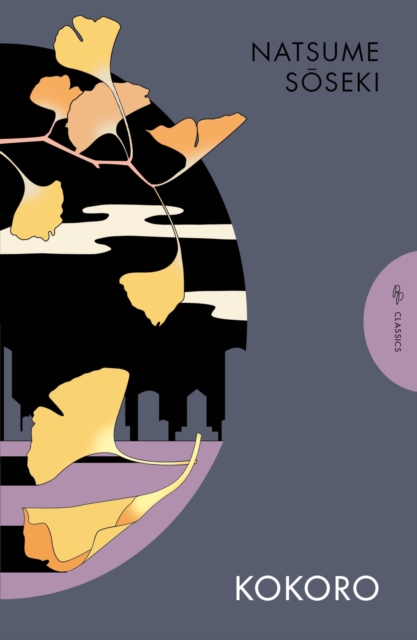
Kokoro
59,000 TNDIn the seaside city of Kamakura, a student is drawn to an enigmatic older man who swims at the same beach. The man becomes his Sensei. Against a backdrop of the rapid modernisation of Japan, their relationship endures – until one day, the young man receives a letter that divulges the full story of his Sensei’s past.
One of Japan’s most admired and bestselling modern classics, Kokoro is a psychologically rich, delicately drawn meditation on loneliness, desire and duty.
-

Love in the Big City
59,000 TNDA fresh and unique debut novel by the bestselling young star of Korean queer fiction about queers and Catholicism, women, abortion, STDs, and the socio-economic class divide in contemporary South Korea.
-

Masks
59,000 TNDPublished for the first time in the UK, one of Japan’s greatest modern female writers Ibuki loves widow Yasuko who is young, charming and sparkling with intelligence as well as beauty. His friend, Mikamé, desires her too but that is not the difficulty. What troubles Ibuki is the curious bond that has grown between Yasuko and her mother-in-law, Mieko, a handsome, cultivated yet jealous woman in her fifties, who is manipulating the relationship between Yasuko and the two men who love her.
-
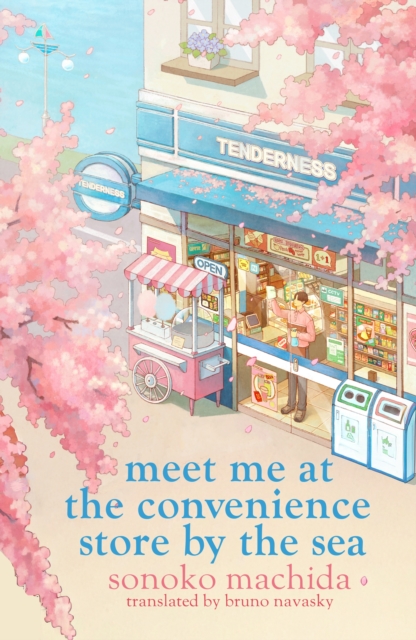
Meet Me at the Convenience Store by the Sea
59,000 TNDWelcome to Tenderness. Our doors are always open. Need a pick-me-up? Visit the Tenderness convenience store in Mojiko, Kitakyushu.
A sweet treat to lift your spirits. A quiet place to talk over a warm meal. A kind word when you need it most.
The sound of the sea in the distance. You’ll always find more than you imagined possible here… Returning to the bestselling series that sold a million copies, Meet Me at the Convenience Store by the Sea follows the customers and employees of a beloved 24/7 convenience store in Japan. -

Mina’s Matchbox
49,000 TNDAfter the death of her father, twelve-year-old Tomoko is sent to live for a year with her uncle in the coastal town of Ashiya. It is a year which will change her life.
The 1970s are bringing changes to Japan and her uncle’s magnificent colonial mansion opens up a new and unfamiliar world for Tomoko; its sprawling gardens are even home to a pygmy hippo the family keeps as a pet. Tomoko finds her relatives equally exotic and beguiling and her growing friendship with her cousin Mina draws her into an intoxicating world full of secret crushes and elaborate storytelling.
-

More Days at the Morisaki Bookshop
59,000 TNDIn Tokyo, there is a neighbourhood with the highest number of bookstores in the world. It is called Jinbocho where book lovers can browse to their heart’s delight and where hunters of first editions or autographed copies prowl the bookcases. The Morisaki bookshop, a small family-run shop, is so packed with books that barely five people can fit inside.
Books crowd the shelves and invade every corner of the floor; when a customer arrives, the owner, Satoru, immediately pops out from behind the counter. Recently, his wife Momoko has joined him, and often, in her free time after work, their niece Takako also helps out. For the first time, the girl does not feel lonely; she has new friends and new rituals to keep her company: the annual Jinbocho festival, the café around the corner, or an unexpected visitor.
Because, as she has discovered, a bookstore is populated not by the characters contained in the books, but also by those who frequent it. And those stories create bonds. As a sign of gratitude, Takako gives her aunt and uncle a trip, promising to look after the shop while they are away.
Everything seems to be going swimmingly, but then why is Satoru behaving so strangely? And what does that woman with the red umbrella want who has appeared at the end of the street? How many other stories, emotions, and treasures does the Morisaki bookshop hold?Loved by thousands of readers worldwide, More Days at the Morisaki Bookshop is a story of hope, friendship and the healing power of books. Will we see you in the bookshop this summer?PRAISE FOR DAYS AT THE MORISAKI BOOKSHOP:’Brims with genuine charm -
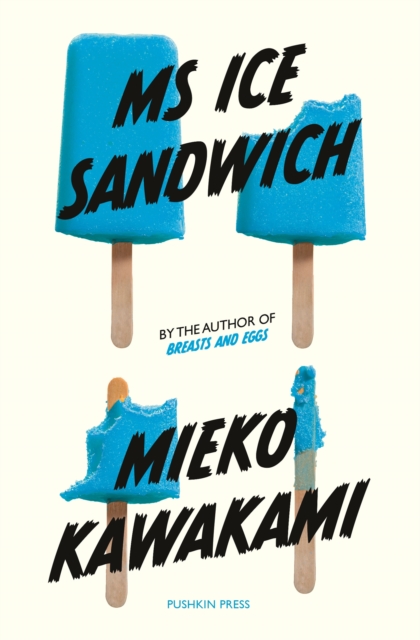
Ms Ice Sandwich
49,000 TNDA young boy returns obsessively to a supermarket sandwich counter, entranced by the beauty of the woman who works there. Her aloof demeanour and electric blue eyelids make him feel the most intense joy he’s ever known. He calls her Ms Ice Sandwich, and he wants nothing more than to spend his days watching her coolly slip sandwiches into bags.
But life keeps getting in the way – there’s his beloved grandmother’s illness, and a faltering friendship with his classmate Tutti, who she invites him into her private world. Wry, intimate and wonderfully skewed, Ms Ice Sandwich is a poignant depiction of the naivety and wisdom of youth, just as it is passing.
-

No Longer Human
59,000 TNDMine has been a life of much shame. I can’t even guess myself what it must be to live the life of a human being. Portraying himself as a failure, the protagonist of Osamu Dazai’s No Longer Human narrates a seemingly normal life even while he feels himself incapable of understanding human beings.
His attempts to reconcile himself to the world around him begin in early childhood, continue through high school, where he becomes a “clown” to mask his alienation, and eventually lead to a failed suicide attempt as an adult. Without sentimentality, he records the casual cruelties of life and its fleeting moments of human connection and tenderness. Still one of the ten bestselling books in Japan, No Longer Human is an important and unforgettable modern classic: “The struggle of the individual to fit into a normalizing society remains just as relevant today as it was at the time of writing.” (The Japan Times)
-
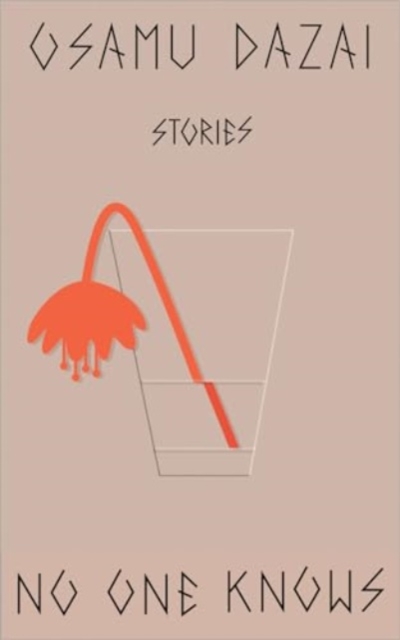
No One Knows
59,000 TNDNo one really understands how we suffer. One day, when we’re adults, we may come to recall this suffering, this misery, as silly and laughable, but how are we to get through the long, hateful period until then? No one bothers to teach us that. Osamu Dazai was a master raconteur who plumbed—in an addictive, easy style—the absurd complexities of life in a society whose expectations cannot be met without sacrificing one’s individual ideals on the altar of conformity.
The gravitational pull of his prose is on full display in these stories. In “Lantern,” a young woman, in love with a well-born but impoverished student, shoplifts a bathing suit for him—and ends up in the local newspaper indicted as a crazed, degenerate communist. In “Chiyojo,” a high-school girl shows early promise as a writer, but as her uncle and mother relentlessly push her to pursue a literary career, she must ask herself: is this what I really want? Or am I supposed to fulfill their own frustrated ambitions? In “Shame,” a young reader writes a fan letter to a writer she admires, only to find out, upon visiting him, that he’s a bourgeoise sophisticate nothing like the desperate rebels he portrays, and decides (in true Dazai style): “Novelists are human trash.
No, they’re worse than that; they’re demons. . .
They write nothing but lies.”This collection of 14 tales—a half-dozen of which have never before appeared in English—is based on a Japanese collection of, as Dazai described them, “soliloquies by female narrators.” No One Knows includes the quietly brilliant long story “Schoolgirl” and shows the fiction of this 20th-century genius in a fresh light.
